After taking an age to get into construction, the first few weeks of the build have gone very well. Mark, our site manager, has gone about his work with minimal fuss and maximum efficiency.
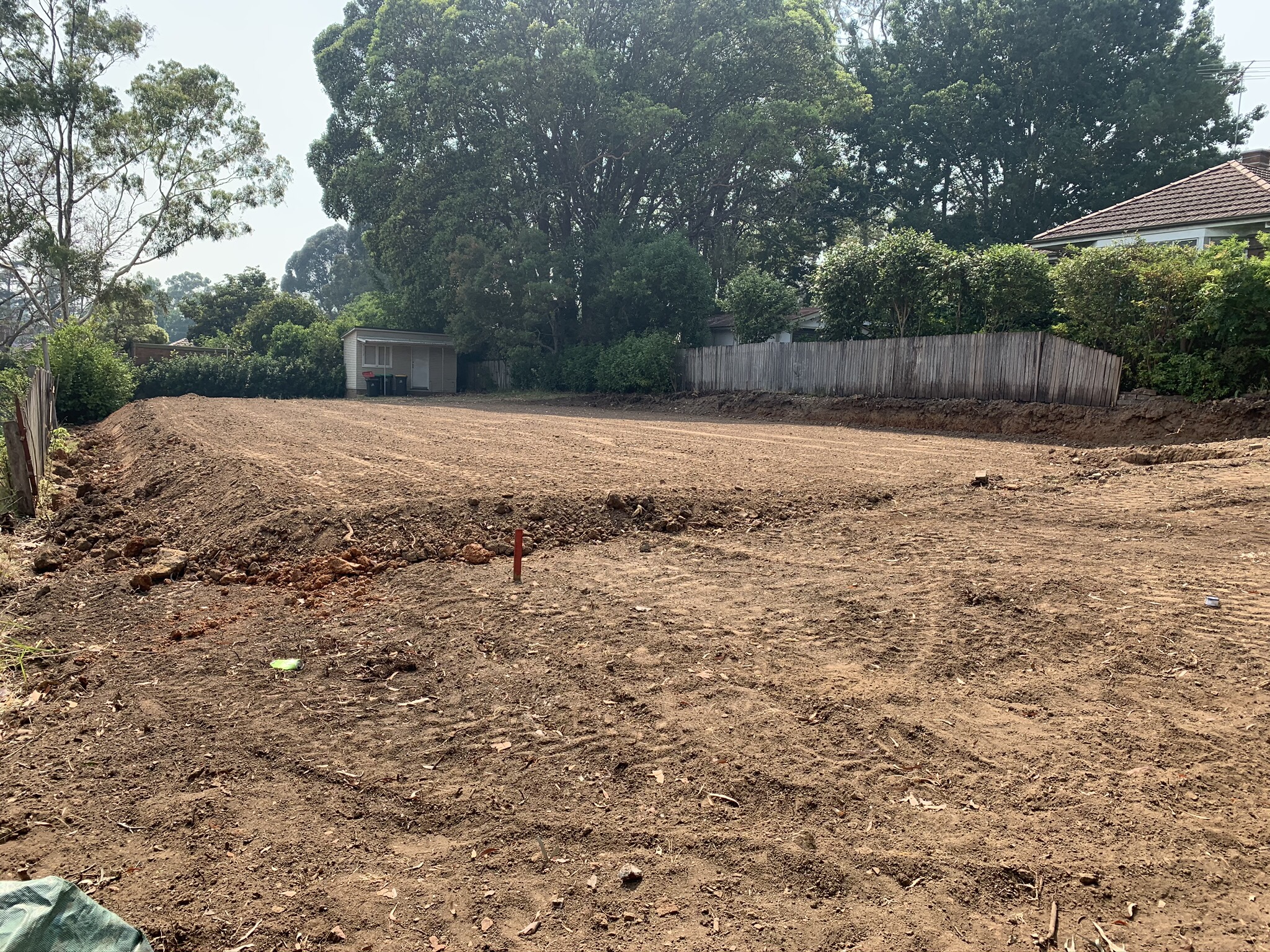
Week 1: the cut and fill. I never considered our block to be particularly sloping, but the cut and fill took about a metre from the higher side of the property to the lower side, and foreshadows some quite substantial retaining walls that we will need to build after handover.
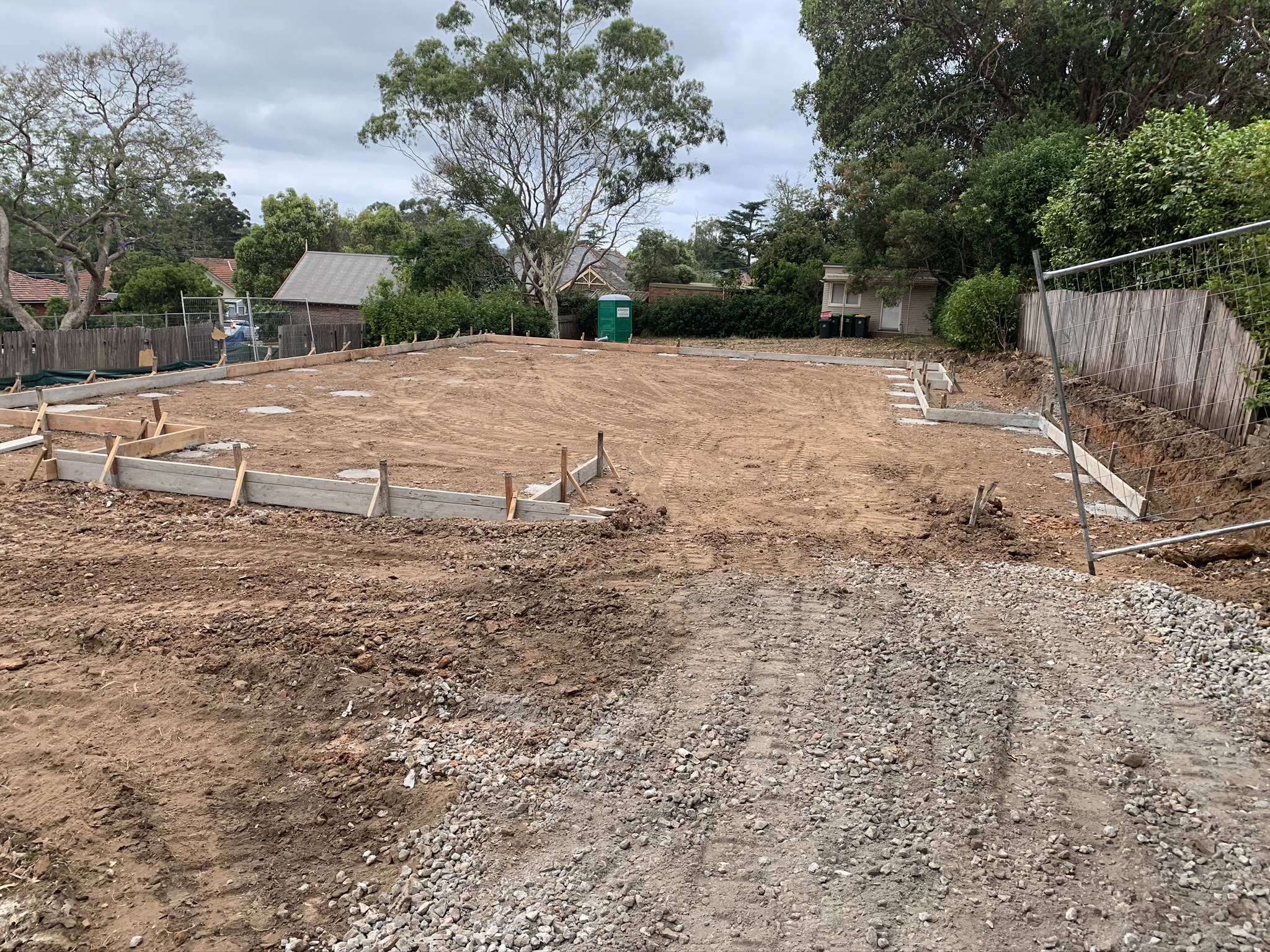
Week 2: piering and putting the “waffle” in the waffle slab.
Those little round concrete dots around the perimeter of the slab outline are the piers:
I wouldn’t normally think of styrofoam as a viable building material but there you go:
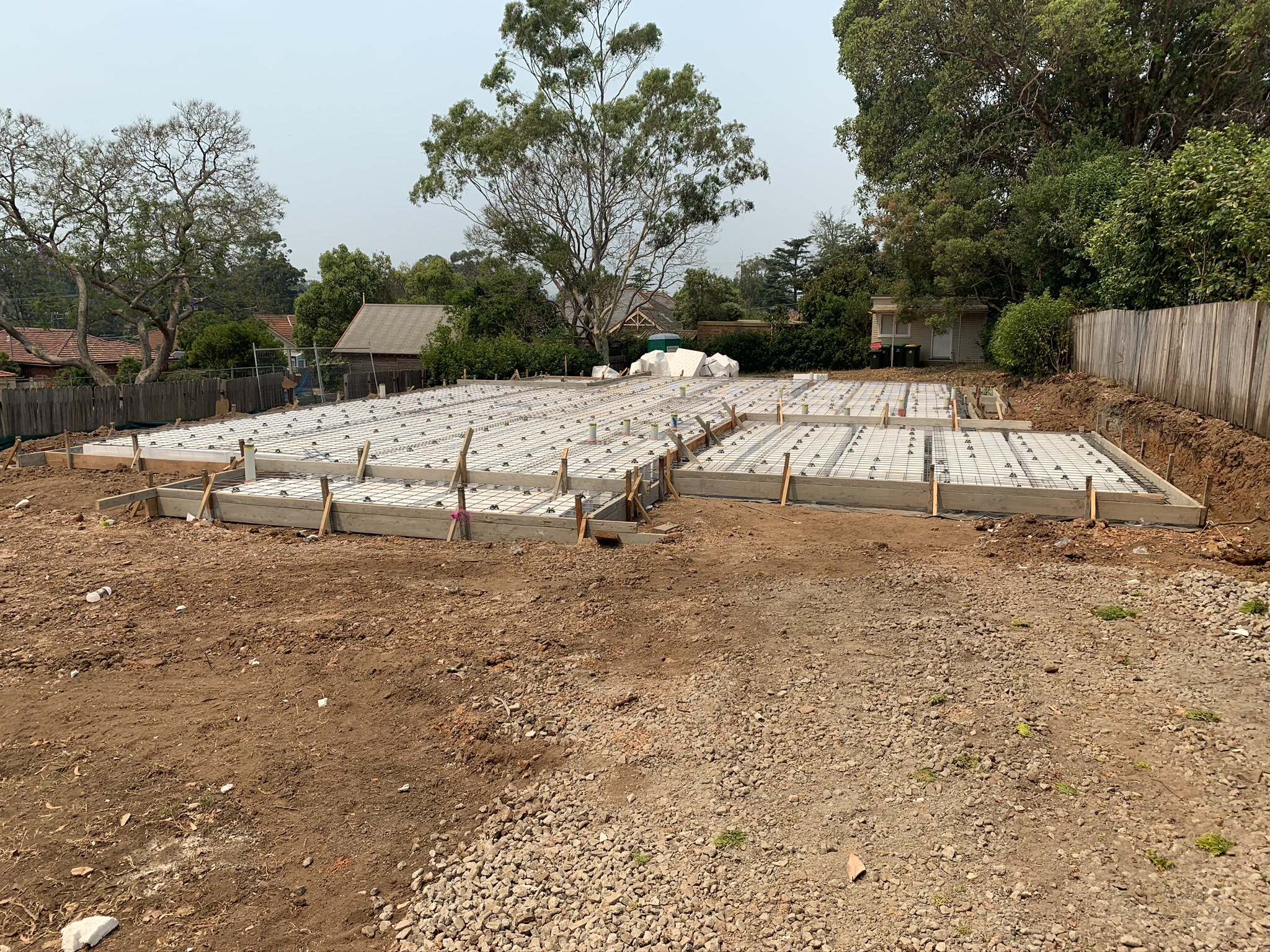
I have to admit to not paying too much attention to what type of slab we were going to be provided. I had assumed that Eden Brae would simply lay the right type of slab for our block, which was classed as H1 (highly reactive) according to the site test.
Seeing the styrofoam waffles led me down a Google garden path where I discovered a little bit of literature and YouTube videos of people criticising waffle slab construction techniques.
There was a class action lawsuit in Western Melbourne where 1 in 5 homeowners were left with homes that had become uninhabitable thanks in part of waffle slabs laid on land too reactive for them to be suitable. Apparently, that was reclaimed swamp land, so had issues with drainage.
It is drainage that appears to be the key to ensuring that the waffle slab performs well over time. If excessive water is allowed to penetrate the soil under your waffle slab, it could cause the land to rise up (unevenly) which would then cause your home above to start shifting and cracking.
The benefits of waffle slab construction are speed and the need for less concrete volume, and therefore final cost to the consumer.
If I had a do over, I would have asked for a solid concrete slab. I doubt it would have been too material an increase relative to the total build price and ensures our forever home stays there, for you know, forever.
But it’s too late for us and we now place our trust in Eden Brae, the soil testing result and Australian Standard 2870, which allows waffle slab construction on H1 soil. After all, the government never got anything wrong in the past and if you can’t trust a corporate to look after their customers in the long term, then there must be something truly wrong with he world….wait.
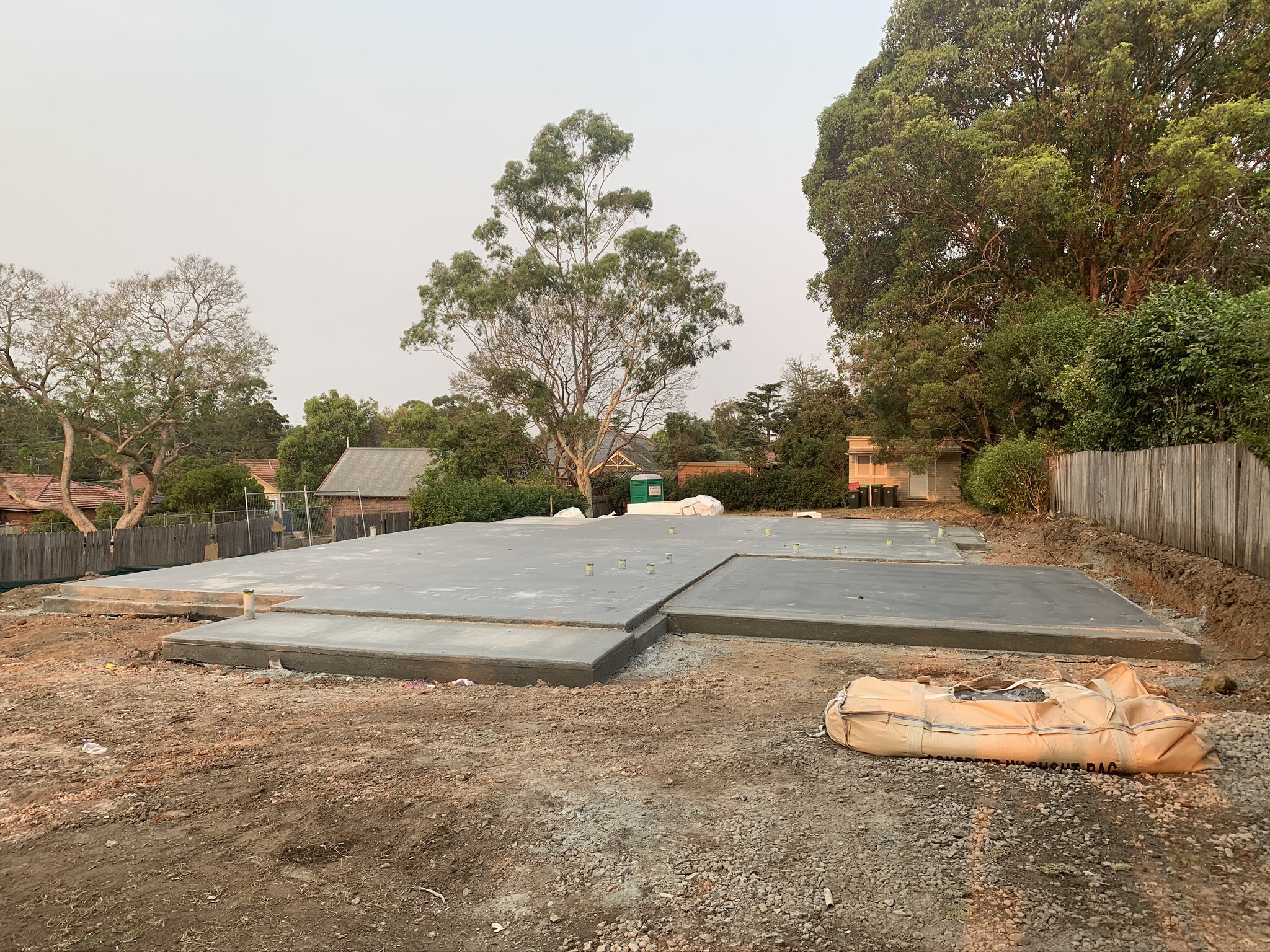
Week 3: concrete is poured for the slab. Yep, definitely too late to replace that waffle slab with something more solid now….
In our old house, we used to have a crack open up in our boys’ bedroom about 1cm wide when it got very dry. Once the heavy rains came, that crack would close up again as the clay underneath reabsorbed water.
That was an old house probably build 70 years ago on brick piers.
This new home will be built to modern standards using modern techniques.
On balance, I’m sure we’ll be fine.
Just like googling symptoms can lead you down a spiral of negativity in regards to your healt, maybe googling random construction techniques without context and expertise can do the same for your build.

 Eden Brae Waldorf 50