A mate of mine once told me that he thought compromise was the most important thing in life. He reasoned that you won’t always get what you want, so you need to learn to be able to live with an alternative that may not be perfect for you, but is a decent enough choice for all.
Going through the selections appointments and the quotes that the various vendors have since sent us, I was reminded of my friend’s words.
Choosing the materials for the home is essentially a series of compromises between what your heart really wants and what your budget will allow.
The standard range of materials are often – how do I say this without insulting anyone who went with the standard range – somewhat “standard” looking. The benefit however, is that there is no additional cost in choosing these.
Faced with a choice of choosing a standard material we don’t really like, something we love but cannot afford, we would often end up choosing something that we didn’t love but wasn’t too expensive to upgrade to – a compromise that pleased no one.
Take kitchen bench top materials. Eden Brae includes 20mm thick Essastone as standard in just three colours; one of which is Silica (first from the left below). What we really wanted is Unique Calacutta (first from the right), an option so expensive that it’s POA! So Kitchen Culture showed us Marmo Bianco (second from the right), and quoted an upgrade cost of $5400 including a bench top in the gallery.
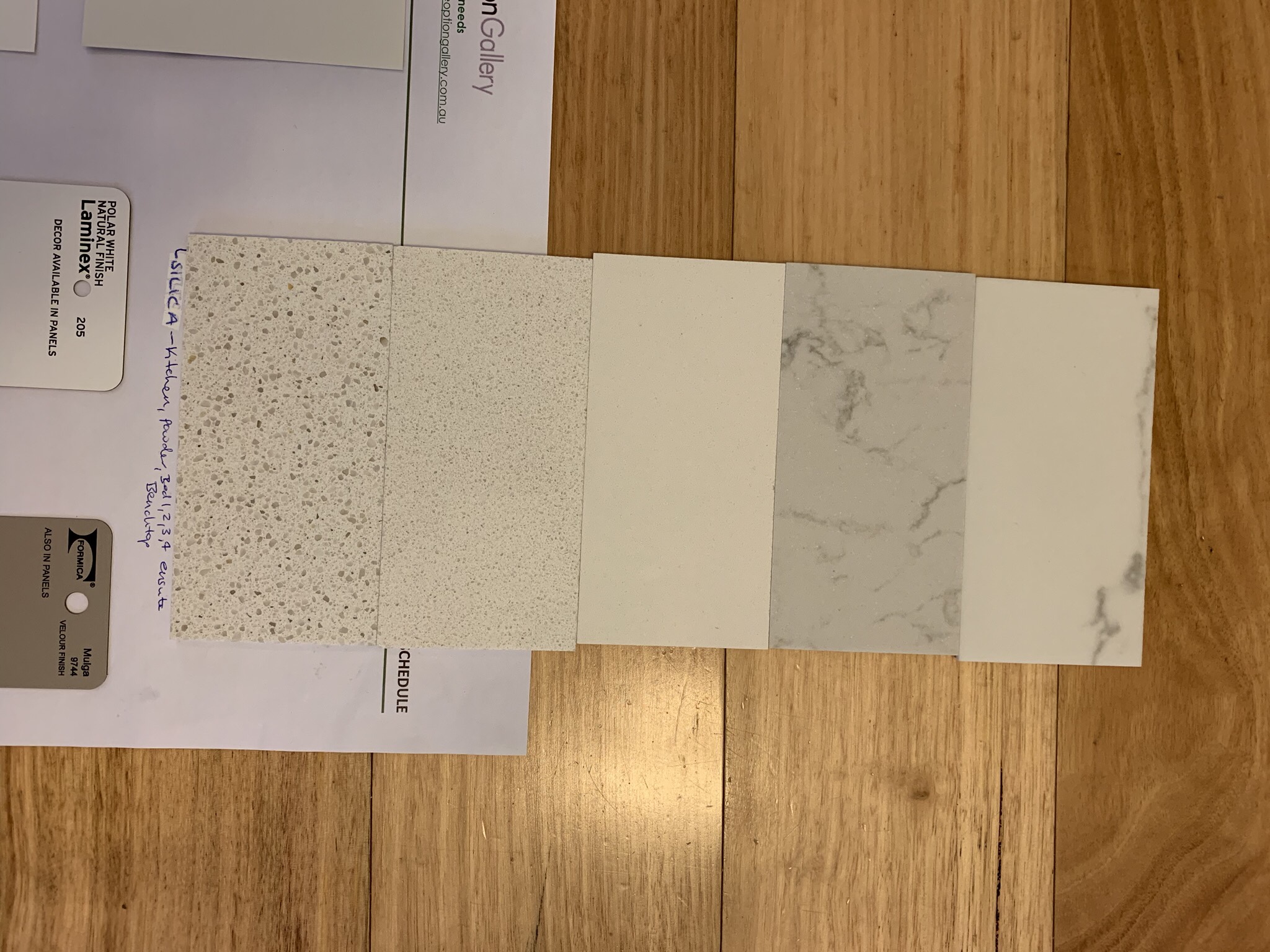
We tentatively chose Marmo Bianco during our appointment, but the more Annie looked at it, the more it reminded her of varicose veins. Not the most appetising image…
In the end, we settled on Crystallite (centre) for the kitchen, a $3300 upgrade option. An option we neither really wanted, nor an additional price we wanted to pay (which was zero).
We chose Calcite (second from the left) for our bathrooms and laundry, a slightly cheaper option that benefits from being slightly more textured and darker, which should contrast nicely against the standard white bathroom wall tile.
A project which started as our dream house is now becoming a house of compromises. Perhaps that’s not such a bad thing. We’ll still swing for the fence, but we’ll just ensure that the fence is at a fiscally responsible distance.

 Eden Brae Waldorf 50